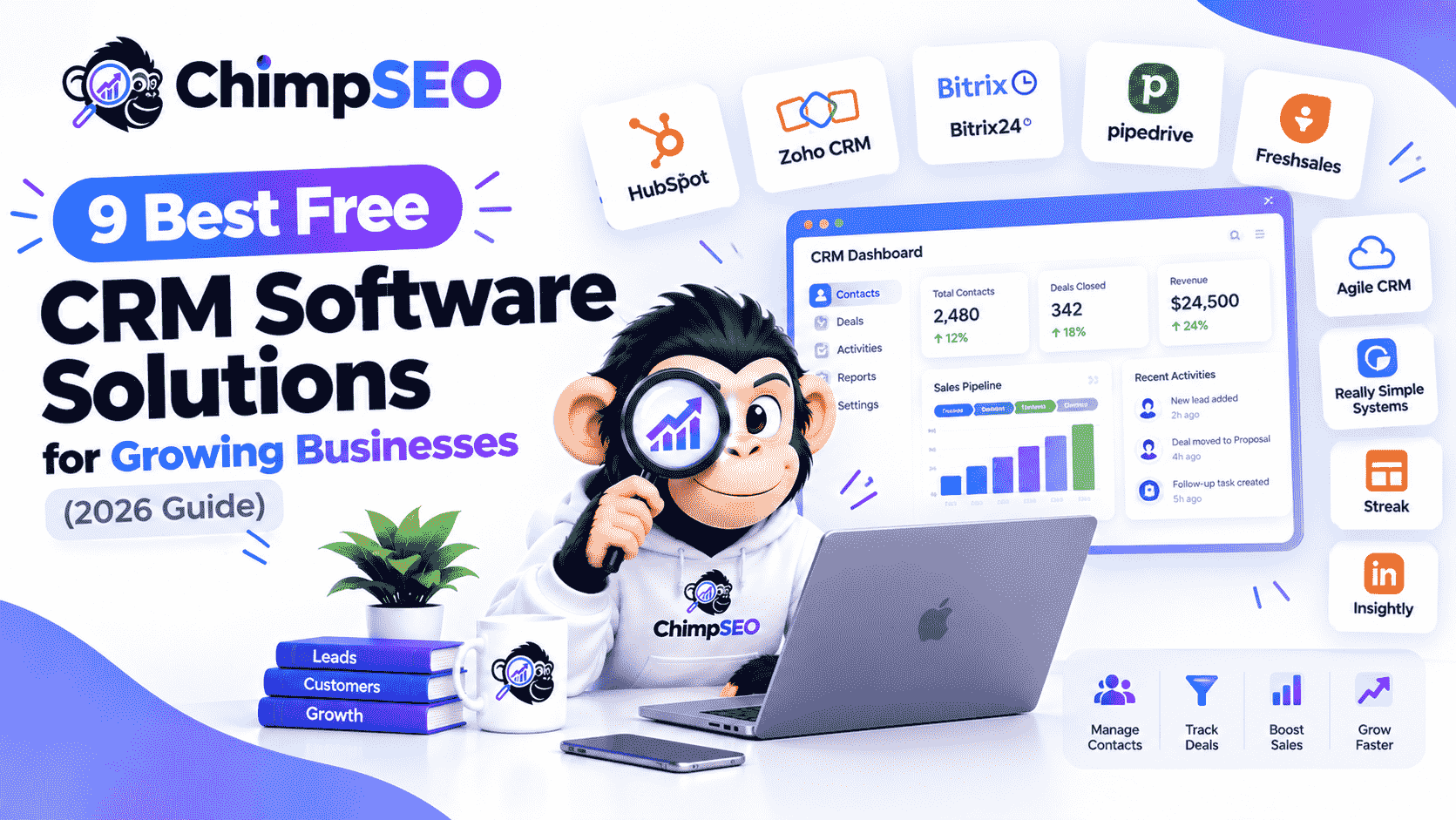
In the modern commercial landscape, managing customer relationships through scattered spreadsheets, fragmented inbox tags, and disorganized sticky notes is a direct path to lost revenue. As client expectations heighten and sales cycles become increasingly multi-channel, having a centralized single source of truth is mandatory. Yet for bootstrapped startups, solopreneurs, and scaling small businesses, enterprise sales platforms with four-figure monthly price tags remain completely out of reach.
Fortunately, the software-as-a-service (SaaS) ecosystem has matured dramatically. In 2026, finding the best free CRM no longer means settling for an abandoned open-source project or an unusable trial masquerading as a free plan. Modern freemium CRM platforms offer enterprise-grade pipeline management, contact tracking, calendar synchronization, and basic workflow automation at absolute zero financial cost.
However, not all free tiers are created equal. Some platforms offer generous contact allowances but limit access to a single seat; others provide unlimited user seats while capping your address book at a few hundred entries. In this comprehensive, data-driven guide, we analyze the top free CRM solutions available today, auditing their features, hidden bottlenecks, and optimal use cases so you can choose the right software to accelerate your revenue.
How We Evaluated the Best Free CRM Platforms
To identify the top contenders in the crowded CRM marketplace, we subjected dozens of platforms to rigorous testing frameworks. Our evaluation was structured around the practical everyday operations of early-stage sales teams, founders, and client managers. Specifically, we assessed each platform against six primary criteria:
- Contact and Deal Capacity: Does the platform impose suffocating limits on contacts, accounts, or active pipeline deals that force an premature upgrade within three months?
- Seat and User Allowances: Is the free tier built exclusively for a solo operator, or does it accommodate collaborative team workflows without demanding individual user licensing fees?
- Native Core Functionality: Can the software manage deal stages, log incoming and outgoing emails, track tasks, and house custom fields without requiring paid add-ons?
- Automation and Integrations: Does the free plan offer webhooks, Zapier connectivity, or foundational triggers, or is all programmatic automation locked behind enterprise tiers?
- Reporting and Pipeline Visibility: Are dashboards actionable and customizable, or are users left with generic, non-filterable summary charts?
- Data Portability: How effortlessly can your organization export its proprietary data via CSV or API if you decide to migrate down the line?
Quick Comparison of the Best Free CRMs
The table below provides a side-by-side snapshot of the leading free CRM platforms, highlighting their user allotments, record boundaries, and primary operational strengths.
| Platform | Free Users | Contact / Deal Limits | Standout Free Feature | Primary Bottleneck | Best Match For |
|---|---|---|---|---|---|
| HubSpot CRM | Unlimited | Up to 1,000,000 contacts | Ecosystem & email tracking | Aggressive paid upgrade pricing | Inbound teams & scaling startups |
| Zoho CRM | 3 Users | 5,000 records | Lead generation & workflow rules | Strict user cap on free plan | Micro-teams needing structured workflows |
| Freshsales | 3 Users | Unlimited contacts | Built-in phone & live chat | Zero workflow automation on free | Outbound prospecting & inside sales |
| Bitrix24 | Unlimited | Unlimited (5GB storage cap) | Omnichannel communications & tasks | Cluttered UI and steep learning curve | Remote cross-functional teams |
| EngageBay | Up to 15 Users | 250 contacts | All-in-one CRM, marketing, & service | Extremely low contact boundary | Solo consultants & boutique agencies |
| Capsule CRM | 2 Users | 250 contacts | Clean, minimalist contact timelines | No campaign tools or file storage | Relationship-centric service professionals |
| Streak | Unlimited | 500 records | Deep, native Gmail inbox integration | Locked strictly inside Google Workspace | Email-heavy founders & dealmakers |
In-Depth Reviews: The Top Free CRM Software Options
1. HubSpot CRM: The Gold Standard for Scalable Free Architecture
HubSpot CRM is frequently cited as the reigning titan of the freemium CRM sector, and for good reason. Unlike competitors that artificially limit the number of colleagues you can invite to the workspace, HubSpot provides unlimited user seats alongside an eye-popping capacity of up to 1,000,000 contacts and companies.
The free tier acts as the central engine for HubSpot’s broader ecosystem, delivering comprehensive contact management, unified company records, deal pipelines, ticketing infrastructure, and real-time website visitor tracking. Sales professionals benefit from custom deal boards with drag-and-drop mechanics, meeting scheduling links that integrate directly with Google or Office 365 calendars, and desktop notifications whenever a prospective buyer opens an email or clicks a proposal link.
What We Like
- No team size limitations: your whole organization can work from a unified database without paying per-seat tax.
- Polished mobile applications for iOS and Android, allowing field reps to update stages and scan business cards on the fly.
- A vast app marketplace containing thousands of pre-built integrations with Slack, WordPress, Mailchimp, and Zoom.
The Catch
While the free tier is extraordinarily generous, HubSpot’s pricing architecture operates on a steep cliff. Once your business outgrows the free features—such as needing advanced branching workflows, custom reporting formulas, or multiple sales pipelines—the jump to their paid Professional editions requires an immense financial leap that can catch growing teams off guard.
2. Zoho CRM: Deep Customization for Micro-Teams
Zoho has spent decades constructing one of the most comprehensive business software suites on the planet. Its standalone Zoho CRM free edition provides an exceptionally structured, highly granular database engine designed for up to three users.
Where many free CRMs cut corners by offering basic flat contact cards, Zoho CRM delivers full-blown relational data modeling. You can capture leads, qualify them into accounts and contacts, and manage corresponding sales opportunities through structured sales stages. The free tier includes contact management, social media lead capture, document storage, and direct email marketing capabilities, making it a favorite for analytical founders who demand structured operational rigor.
What We Like
- Comprehensive custom field creation, letting you tailor data capture parameters to niche vertical markets.
- Basic workflow rule automation included on the free edition to auto-assign leads and trigger task updates.
- Effortless interoperability with the broader Zoho universe, including Zoho Books, Zoho Desk, and Zoho Projects.
The Catch
The primary constraint is the hard wall of three user accounts. If your team hires a fourth sales representative or brings on an external account manager, you must upgrade your entire operational footprint to a paid tier. Furthermore, the dashboard navigation can occasionally feel labyrinthine compared to modern minimalist SaaS tools.
3. Freshsales: The Best Free CRM for Phone and Multi-Channel Communication
Developed by Freshworks, Freshsales is engineered specifically for velocity sales teams that rely heavily on real-time outreach via telephone, live web chat, and email. The free tier supports up to three users and features an intuitive modern interface that minimizes onboarding friction for new hires.
One of Freshsales’ most compelling free features is its built-in cloud telephony infrastructure. While you must purchase your own phone credits or connect a SIP trunk, the platform allows reps to place calls, record conversations, and log audio files directly inside the contact’s activity history without toggling between third-party software. Combined with native chat integration that feeds visitor conversations directly into your sales funnel, Freshsales turns your website into an inbound lead capture mechanism instantly.
What We Like
- Unrestricted contact volume: you are not artificially penalized as your raw lead database expands.
- Integrated outbound phone calling with automatic call logging and recording capture on the free tier.
- Clean Kanban-style deal tracking pipelines that facilitate rapid pipeline reviews and stage progressions.
The Catch
Freshsales strips away all automated workflow logic from its free tier. You cannot set up automated email sequences or round-robin lead allocation algorithms without moving to their Growth or Pro tiers. If your operations rely on automated sales cadences, manual follow-ups will be required.
4. Bitrix24: Uncapped Collaboration and Omnichannel Workspace
Bitrix24 takes a fundamentally different philosophical approach to business software. Rather than functioning solely as an isolated CRM, Bitrix24 is an expansive digital operating system incorporating project management, Gantt charts, internal team chat, video conferencing, document drives, and website landing page builders—all accessible on its free plan.
For organizations operating across distributed remote teams, Bitrix24 offers an astonishing volume of utility. It includes unlimited user access on its baseline plan, restricted only by a 5GB overall cloud storage threshold. The platform supports contact tracking, customer invoicing, quote generation, and integrated contact center features that unify WhatsApp, live chat, and social messaging channels into a single operator inbox.
What We Like
- Unlimited users with integrated quoting and client invoicing tools included completely free.
- Omnichannel communication center that consolidates multiple social messaging accounts into one dashboard.
- Built-in collaboration suite featuring video conferencing, task management boards, and shared calendars.
The Catch
Bitrix24 suffers from significant feature bloat. Because it attempts to solve every business challenge simultaneously, the user interface can feel overwhelmed with settings, menus, and conflicting configuration panels. Configuring the platform requires patience and technical trial-and-error.
5. EngageBay: The True All-In-One Alternative to HubSpot
EngageBay was built explicitly to serve small businesses seeking an affordable, end-to-end mirror of HubSpot’s holistic ecosystem. It unifies sales automation, email marketing campaigns, live chat support, and ticketing within a unified platform.
The free tier accommodates up to 15 users, which is unusually generous for a combined marketing-and-sales tool. On the free plan, you receive access to contact management, custom deal pipelines, appointment scheduling software, basic email marketing broadcasts (up to 1,000 branded emails per month), and a live chat widget you can install directly onto your site. This combination makes EngageBay an exceptional launchpad for service agencies and consultancies seeking to drive marketing and close deals from a unified screen.
What We Like
- Consolidates sales pipeline tracking, marketing email distribution, and customer support ticketing under one login.
- Built-in appointment scheduling landing pages that eradicate the need for an external Calendly subscription.
- Generous seat capacity (up to 15 team members) compared to other multi-discipline suites.
The Catch
EngageBay limits its free plan to 250 contacts and companies. Once your audience crosses that threshold, you must upgrade. The good news is that EngageBay’s paid tiers are vastly more affordable than enterprise competitors, making it a realistic financial stepping stone for bootstrap operators.
6. Capsule CRM: Pure Minimalist Relationship Management
For many solo professionals, boutique consultants, and creative freelancers, modern enterprise CRMs are simply too complicated. Capsule CRM combats this complexity by prioritizing speed, exceptional simplicity, and relationship-centric contact management.
Capsule’s free plan allows up to two users and maintains a streamlined ledger of 250 contacts. Instead of overwhelming you with hundreds of analytical metrics, Capsule focuses on relationship timelines: who you spoke to, what was discussed, what commitments were made, and when you are scheduled to touch base next. The platform includes a visual Kanban sales board, historical interaction feeds, and native integrations with Google Workspace and Microsoft 365.
What We Like
- Virtually non-existent learning curve; new team members can master the system in less than thirty minutes.
- Clean, clutter-free chronological activity streams that capture the full context of every prospect relationship.
- Extremely fast interface with zero administrative overhead or unnecessary configuration screens.
The Catch
The 250-contact boundary arrives quickly, even for part-time freelancers. Additionally, you will find no built-in email broadcast engines, advanced reporting widgets, or automated lead capture forms on the free plan.
7. Streak: The Best CRM Built Directly Inside Gmail
If your daily workflow revolves entirely around your Google Workspace inbox, Streak is one of the most innovative productivity tools available. Rather than forcing you to work inside an external web application, Streak converts your native desktop Gmail interface into a flexible, spreadsheet-style CRM database.
Streak integrates directly into the Chrome browser, weaving contact histories, deal stages, and custom tracking fields into your incoming and outgoing email threads. With its free plan, you can maintain up to 500 pipeline records, run basic mail merges, and track whether recipients have opened your correspondence. It is especially potent for founders running fundraising rounds, journalists tracking sources, or real estate brokers managing property inquiries directly from their inbox.
What We Like
- Eliminates context switching: you never have to leave Gmail to log emails, move deals, or review notes.
- Intuitive spreadsheet-style UI that allows for inline editing, fast filtering, and customized column sorting.
- Built-in email tracking notifications that alert you the moment a prospect opens your message.
The Catch
Streak is inextricably tied to Google Chrome and Gmail. If your organization relies on Microsoft Outlook, Apple Mail, or dedicated desktop clients, Streak cannot function. Furthermore, the 500-box limit requires consistent database hygiene to avoid running out of capacity.
The Hidden Gotchas of Freemium CRMs
Software companies are not charitable organizations. The freemium model exists as a customer acquisition funnel designed to convert free accounts into predictable recurring subscription revenue. While using a free CRM is an intelligent tactic for early-stage teams, you must enter these platforms with a clear understanding of where vendors place their financial tripwires.
1. The Integration and API Wall
The most pervasive barrier on free plans is the restriction of programmatic integrations. While software vendors will gladly let you manually import spreadsheets, they frequently lock open REST APIs and native webhook triggers behind paid tiers. This prevents you from connecting automation platforms like Zapier or Make, forcing manual data entry unless you upgrade.
2. Analytical Blindspots
Basic pipeline dashboards that show total deal values are standard across nearly all free plans. However, advanced business intelligence—such as historical sales velocity, deal slippage metrics, weighted pipeline forecasting, and individual rep performance scorecards—is almost universally reserved for premium plans. If your leadership team requires granular visibility into why deals are stalling, a free plan may leave you operating in the dark.
3. Customer Support Deprivation
When an issue arises on a free CRM tier—such as an email sync failure or a corrupted CSV import—you rarely have access to live chat, phone support, or dedicated ticket queues. Free users are usually relegated to community forums, documentation libraries, or automated AI chatbots. If system uptime is mission-critical to your revenue, evaluate whether self-guided troubleshooting fits your risk tolerance.
Strategic Guide: Choosing the Right Free CRM for Your Business Model
Selecting the optimal software requires balancing your current operational reality against your 12-month commercial roadmap. Below is our framework for matching your organizational structure to the ideal free platform.
For Solopreneurs, Consultants, and Coaches
If you run a high-touch, low-volume service business where each client relationship represents substantial annual contract value, raw contact capacity is largely irrelevant. Your priorities should be simplicity, task management, and zero software friction.
Top Recommendations: Capsule CRM for maximum simplicity, or Streak if you handle all business via Gmail.
For Outbound B2B Sales Teams
If your go-to-market strategy revolves around cold outreach, multi-touch cold calling, and fast-moving transactional deal flow, you need high contact thresholds, built-in communication tools, and rapid pipeline interfaces.
Top Recommendations: Freshsales for its integrated dialer and contact capacity, or HubSpot CRM for email tracking and cross-team alignment.
For Complex Multi-Disciplinary Startups
If your startup demands unified operations connecting marketing lead funnels, product demos, onboarding tickets, and customer communications under a single roof, point solutions will quickly lead to messy data silos.
Top Recommendations: EngageBay for balanced marketing/sales suites with small initial lists, or Bitrix24 if you require unlimited internal user accounts and deep operational toolsets.
Step-by-Step: How to Implement a Free CRM in 48 Hours
Deploying a new CRM does not require months of consulting retainers. By following a structured, phased rollout, you can deploy your chosen free platform, clean your data, and have your team executing active deals within two days.
Phase 1: Consolidate and Sanitize Your Existing Data (Hours 1–12)
Before importing a single record into your new platform, locate every data silo across your business: exported LinkedIn connections, email contact lists, bookkeeping software files, and abandoned spreadsheets. Open them in your spreadsheet software of choice and perform rigorous sanitization:
- Standardize column headers (First Name, Last Name, Email, Organization, Phone, Stage).
- Deduplicate records by filtering unique email addresses.
- Purge stale contacts, obsolete vendor emails, and bounce-backs to conserve your contact allocation.
Phase 2: Model Your Pipeline Stages (Hours 13–24)
Resist the urge to overcomplicate your deal stages. An effective pipeline should strictly map your prospective buyer’s purchasing behavior, not internal wishful thinking. A proven six-stage framework for early-stage companies includes:
- Prospect Identified: Lead captured via inbound form, outbound research, or direct referral.
- Discovery Call Completed: Mutual fit and business pain points confirmed.
- Solution Proposed: Formal quote, demo, or pitch delivered.
- Negotiation / Legal Review: Commercial terms under review by decision-makers.
- Closed Won: Contract executed and initial payment received.
- Closed Lost: Deal passed or deferred (always document the root loss reason).
Phase 3: Configure Integrations and Extensions (Hours 25–36)
Maximize the passive utility of your CRM by automating everyday data capture. Connect your team’s email accounts via IMAP/SMTP or install the relevant Chrome extensions (such as the HubSpot Sales or Streak Gmail plugins). Activate calendar synchronization so discovery meetings booked on your calendar populate on client records without manual intervention.
Phase 4: Run a Test Deal and Train Your Team (Hours 37–48)
Conduct a live drill. Create a mock deal, advance it through each stage of your newly established pipeline, log a test phone call, attach a sample proposal PDF, and mark the deal as Won. Once you verify that stage tracking, activity timelines, and contact attributes behave properly, train your team on one core operational rule:
"If an interaction, call, or email is not logged in the CRM, it officially never happened."
Final Verdict: What Is the Best Free CRM for 2026?
The marketplace for free customer relationship management tools has never been more competitive. Software vendors recognize that winning your loyalty while you are operating on a shoestring budget is the most reliable way to secure your business when your enterprise reaches multi-million-dollar ARR.
Taking into account feature richness, user limits, ecosystem stability, and scalability, HubSpot CRM remains the undisputed best free CRM overall. Its offer of up to 1,000,000 contacts, unlimited users, and best-in-class email tracking infrastructure provides an unmatched operating foundation for businesses planning for long-term growth.
However, if your sales operations demand structured multi-user pipelines on a tight framework, Zoho CRM provides unmatched relational flexibility. For high-volume calling, Freshsales is our top pick, while Streak remains the ultimate productivity weapon for Gmail power users. Audit your operational bottlenecks, verify your contact volume, and deploy one of these powerful free platforms today to streamline your sales operations without spending a cent.